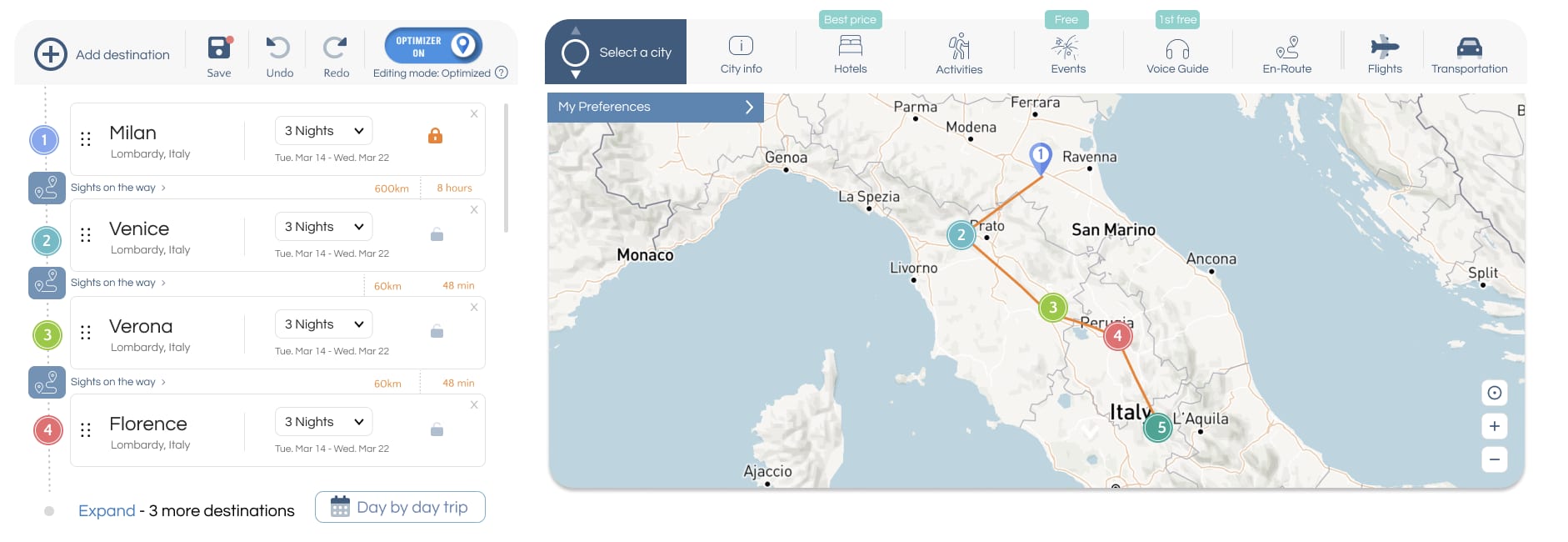
My Plan: 

Portugal Past and Present

Rename
12 days

About Lisbon

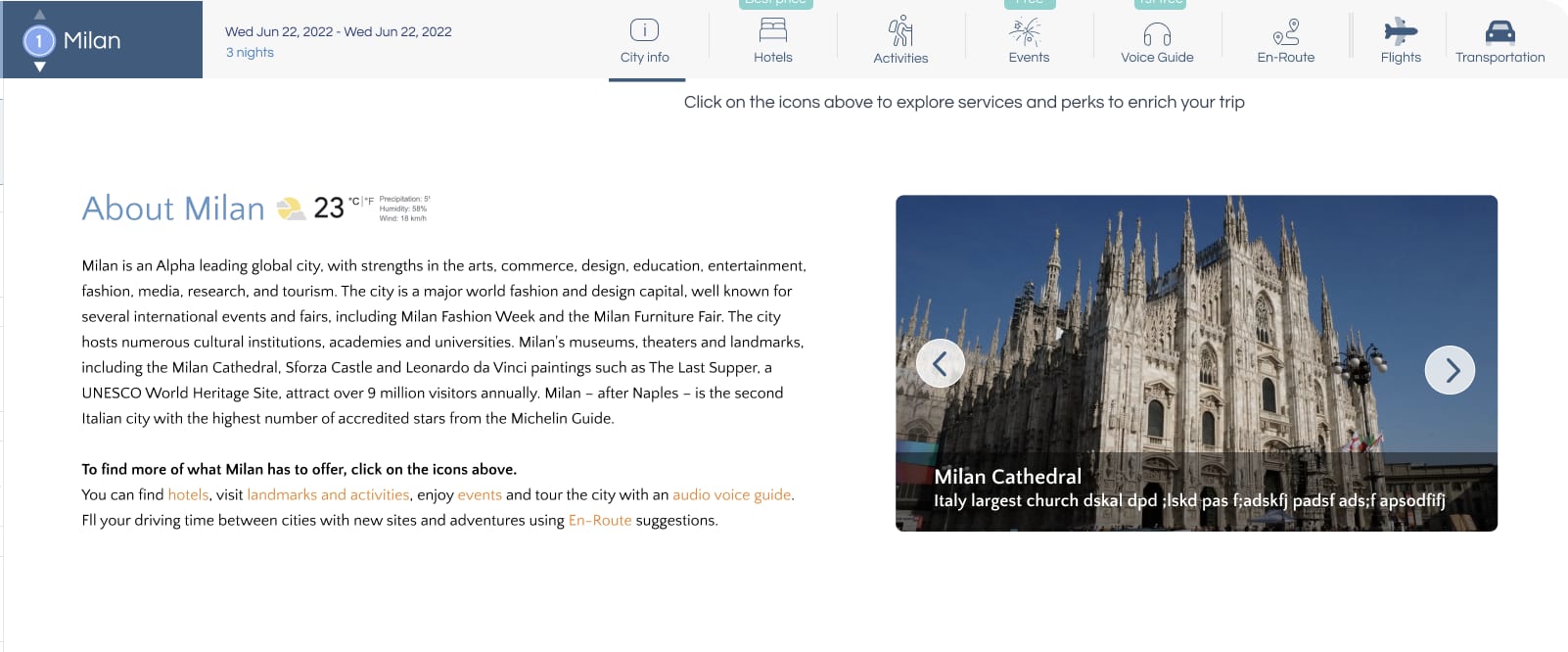
A naturally beautiful city which is surrounded by and set on seven steep hills (though some say eight!), Lisbon overlooks the Tagus River, the longest river in the Iberian Peninsula. Characterized by its laid-back atmosphere, Lisbon is known for vibrant culture, history, and architecture as well as for its picture-perfect panoramas.

A naturally beautiful city which is surrounded by and set on seven steep hills (though some say eight!), Lisbon overlooks the Tagus River, the longest river in the Iberian Peninsula. Characterized by its laid-back atmosphere, Lisbon is known for vibrant culture, history, and architecture as well as for its picture-perfect panoramas.

Lisbon’s neighborhoods are comprised of steep, narrow streets which accommodate its hilly landscape, and the city’s old-world trams and cable elevators connect them. Today, Lisbon is a city of approximately 546,000 residents and is part of a metropolis which comprises close to 3 million inhabitants. Because of Lisbon’s strategic location, it has, historically, been an important seaport for trade between northern Europe and the Mediterranean Sea. Originally known as “Olisspo” after Ulysses, one of the heroes of Greek mythology, its name was changed to “El Lisbon” by the Muslims in the 8th century. In 1147, Lisbon was conquered by the Christians and, in 1255, was declared the Portuguese capital. Lisbon’s glory came in the 15th and 16th centuries when it was the center for discovery expeditions to the New World. The Manuelin style of architecture, named after King Manuel I who financed spice trade between India and Africa, developed during this period. A large earthquake in the mid-18th century destroyed most of the buildings from that time, though there are two remaining Manueline style structures - the iconic, 16th century Belem Tower (Torre de Belem), originally built on the edge of the river to protect the city, and the Jeronimos Monastery. The monastery, which was badly damaged from the earthquake but survived, is covered with white marble and stone carvings which glorify Portugal’s pioneering maritime discoveries. Inside, there are tombs and sculptures of kings and two of Portugal’s greatest heroes, Vasco de Gama, the explorer, and Luis de Camoish, Portugal’s national poet. Both structures are now UNESCO World Heritage sites. The medieval Castelo De Sao Jorge fortress stands at the top of Alfama hill, the largest of the city’s seven hills. The castle is built on 5th century Visigoth foundations as well as 9th century Moorish foundations. In the 12th century, after capturing the city from the Moors, Alfonso Enrique added to the structure. From the castle, there is a spectacular view of the city, the river, and the enormous suspension bridge, the Ponte 25 de Abril. Another famous look-out point which offers spectacular views is Edward VII Park, named after Britain’s monarch who visited the city in 1903. It is the largest park in Lisbon and extends uphill from Marques de Pombal Square to an open pavilion at the top. Alfama is the heart and soul of Lisbon - a neighborhood dating back to medieval times with a maze of cobbled alleys, hidden courtyards, charming squares, and houses with colorful tiles and iron-railed balconies. It is located at the foot of the castle and is a fun place for a stroll as well as to enjoy the city’s many fado restaurants which serve local specialties and offer fado-style music. The Terreiro do Paco (also known as Praca do Comercio), is located on the riverfront, and is known as one of the most important squares in Lisbon. It served as the royal palace for two centuries prior to being destroyed by the 1755 earthquake. Today, it is a pedestrian square from which you can reach the Tagus River. The Chiado and Bairro Alto districts are two archetypal Lisbon neighborhoods. Chiado is trendy with its celebrated cafes, bookshops, boutiques, and theaters, including Lisbon’s opera house. Bairro Alto is the center of the city’s nightlife with its many pubs, clubs, and bars. The LUX club is one of Lisbon’s most famed nightclubs and, with its total capacity of over 3000, has been a favorite spot of the rich and famous. Actor John Malkovich, who shot a movie in Portugal and fell in love with the club, is now a partial owner. The famous restaurant, Bica do Sapato (“the tip of the shoe”), is located adjacent to the club. Luis de Camoish Square, named after the national poet, connects the two districts. Avenida Da Liberdade, the "Portuguese Champs-Elysées,” is a wide boulevard with tall trees and dozens of statues lining it as well as an Egyptian pillar dedicated to Portugal’s independence. The business center of Lisbon, the street is also lined with hotels, banks, cinemas, and international brand stores. Further down the boulevard is Rossio Square with its statue of Dom Pedro IV (who was both the King of Portugal and the Emperor of Brazil) and 2 French- style fountains. Lisbon is home to world-class museums. The Museu Caloute Gulbenkain is located in a lush park and is one of the city’s gems. Much of the museum’s collection came from a wealthy Armenian oil magnate, Calouste Sarkis Gulbenkian, who endowed his vast, outstanding private art collection to Portugal before he died in 1955. The National Museum of Ancient Art is Portugal’s national gallery which houses a large collection of 15th and 16th century paintings, as well as Oriental, European, and African art. The National Tile Museum, Museu Nacional do Azulejo, houses a unique collection of decorative tiles, known as azulejos, and it traces tile-making from its Moorish and Spanish influences through the rise of Portugal’s unique style. The MAAT - Museum of Art, Architecture, and Technology - which is housed in a converted power station on the waterfront, is an outstanding new cultural center in Lisbon. The 12th century Lisbon Cathedral, located near the Alfama district, is Lisbon’s oldest and most famous church. Originally a Romanesque cathedral, the structure was destroyed in the earthquake and today it blends architectural styles. Its two bell towers are a beautiful part of the city’s skyline. The Padrão dos Descobrimentos, the Monument of the Discoveries, is located on the banks of the Tagus River estuary– the place from which ships departed for maritime discovery voyages. Designed by 2 Portuguese architects, it is a massive structure in the shape of the prow of a ship which celebrates the Portuguese explorers who established the country’s seafaring prominence. In the interior of the 170-foot high tower, there is an exhibition about the history of Lisbon, and the monument’s viewing platform offers spectacular views. The 1988 World’s Fair Expo was held in Lisbon, and the entire eastern part along the river was renovated and became a showcase for the city’s new and modern architecture. There is a new complex called Park of the Nations (Parquet das Nacoes) which includes the Oriente train station and the Vasco de Gama shopping mall. There are two large towers designed as a giant sail, and the Oceanarium is a huge, popular aquarium with over 8000 sea animals. A train transports visitors between attractions. The village of Sintra is a 30 minute train ride from Lisbon and is a not-to-be-missed day trip. Sintra was a royal resort, and it is home to extraordinary palaces, a Moorish castle, a semi tropical garden, and scenic views. With its combination of captivating tradition and modern touches, Lisbon is a popular destination – and city that many tourists long to return to! 

re-order

Lisbon

Free cancellation

en route icon

Sights on the way 204.77 km | 2 hrs 10 mins

About Coimbra

Coimbra, a historic riverfront city, was Portugal’s capital between the 12th and 13th centuries. It has a well-preserved medieval town, and its character is largely influenced by its world renowned academic institution, the University of Coimbra, one of the oldest universities in the world and the oldest and most prestigious in Portugal.

Coimbra, a historic riverfront city, was Portugal’s capital between the 12th and 13th centuries. It has a well-preserved medieval town, and its character is largely influenced by its world renowned academic institution, the University of Coimbra, one of the oldest universities in the world and the oldest and most prestigious in Portugal.

The university, now a UNESCO World Heritage Site, had been founded in 1290 in Lisbon but was moved to Coimbra in 1537, attracting an influx of Spanish, Italian, and French artists and intellectuals. The Academy of Art and Sculpture which was established as a result of the influx left an important imprint on the country’s artistic development. The original university is located at the top of the Alta, a steep hill above the city, and it is a cluster of impressive 16th-18th century buildings which are built around a spacious square. The statue of King Joao III stands in the center of the square, and the iconic 17th century Paco das Escolas tower houses the clock and bells that play an important role in academic life. The university includes several outstanding buildings: the Chapel of Sao Miguel is known for its Manueline adornments, painted tiles, and baroque organ; the Sala dos Capelos hall is where the most noteworthy ceremonies are held; and the highlight – the famed 18th century baroque Joanine Library- is one of the largest and richest in Europe with over 300,000 books, including 5000 manuscripts, some of which date back to the 12th century. The new city of Coimbra, known as Biyasha (meaning “bottom”) is sprawled at the foot of the hill and along the river, and, with time, the university has expanded into the new urban areas. Its modern buildings attract many visitors, as well. Other notable historic landmarks in Coimbra exhibiting the splendor of Romanesque art include the Monastery of Santa Cruz in which the first King of Portugal, Alfonso Henriques, is buried; the 14th century Monastery of Santa Clara-a-Velha; and the Se Velha, the old Cathedral of Coimbra, which is considered to be one of the most beautiful examples of Romanesque architecture in Portugal. The Machado de Castro National Museum has important collections related to the history of the city, including Roman architecture. The city is also home to beautiful gardens – Choupal, Quinta das Lagrimas, and the Botanical Gardens are popular sites. Coimbra’s 25,000 students contribute to the special atmosphere of the city, and their ceremonies throughout the year are festive events which engage the whole city. The most well known is the colorful Quema Das Fitas, the ritual burning of the colored ribbons of each faculty, which celebrates the end of academic coursework. Coimbra hosts several other festivals, as well. The Festa da Rainha Santa Queen Festival is dedicated to Saint Isabella, and it is a spectacular candlelight procession which crosses the river and passes through the streets of the city. Festada Cidade involves folk music shows, folk dances, and fireworks, and the Arts Festival - Festival das Artes- includes cultural events, classical music concerts, jazz shows on river boats, culinary events by the best famous chefs, and city-wide celebrations. In short, Coimbra is a charming, lively city which is steeped in culture and history – a great destination on your trip to Portugal! 

re-order

Coimbra

Free cancellation

en route icon

Sights on the way 129.73 km | 1 hr 35 mins

About Porto

Porto, the second largest city in Portugal, is an ancient city, yet one that is young and vibrant in spirit. A coastal city located on the northern bank of the mouth of the Douro River, it is home to historical sites - baroque churches, bell towers rising over the city, magnificent Art Nouveau style buildings, and narrow alleys studded with bookstores and antiques- as well as a vibrant night life, great shopping, cafes, excellent restaurants, and the Port lodges which feature the outstanding local Port wines. Porto is also known for its laid-back vibe and its beauty - charming homes along the banks of the river, romantic spots, and picturesque bridges which connect its two sides.

Porto, the second largest city in Portugal, is an ancient city, yet one that is young and vibrant in spirit. A coastal city located on the northern bank of the mouth of the Douro River, it is home to historical sites - baroque churches, bell towers rising over the city, magnificent Art Nouveau style buildings, and narrow alleys studded with bookstores and antiques- as well as a vibrant night life, great shopping, cafes, excellent restaurants, and the Port lodges which feature the outstanding local Port wines. Porto is also known for its laid-back vibe and its beauty - charming homes along the banks of the river, romantic spots, and picturesque bridges which connect its two sides.

Portugal derives its name from the city of Porto. Originally a Celtic hamlet called Cale, the Romans added the port and established a settlement on both sides of the river, naming it “Portus Cale” which eventually became Portucale and gave the name not only to the city, but to the nation of Portugal. The Moors ruled briefly during the city’s early times, but Porto came under Christian domination in 1092. Porto became an important port city in the 14th century, and, during the early 19th century, it came under British rule during the Peninsular War. Grapes have been grown in Portugal since ancient times, and the Romans, who inhabited the area for over 500 years, starting from the 2nd century BC, planted vineyards and made wine on the Douro River. During the era of Portugal’s prosperity, after the establishment of its kingdom in 1143, wine became an important export. Port wines started to be produced and exported later- in the 2nd half of the 17th century. Ribreira (riverside) Square is Porto's oldest district, and it was declared a UNESCO World Heritage Site in 1996. Located on the river bank, the old town is a maze of narrow, winding alleys dotted with cafes, workshops, and small shops with elegant, Art Nouveau style facades. There are beautiful squares which are popular meeting places for the "tripeiros" – the name given to the residents of Porto. The facades of the old merchants' houses facing the river are painted in many colors, and the many restaurants and cafes along the river are popular with both locals and tourists. You can cross the river on a rabelo boat along the promenade – one of the colorful boats that had been used to transport port wine down the river and now serve as pleasure boats. Other Porto highlights include the 14th century São Francisco Church, with its lavish baroque interior and ornate gilded carvings, and the palatial 19th-century Palácio de Bolsa, formerly a stock exchange, which was built to impress potential European investors. The Clerigos Tower is an ornate bell tower which rises above the city and has become a city icon. It offers panoramic views of the city, which are well-worth the 225 step climb up! The Sao Bento train station, with its entrance hall composed of 2000 decorative ceramic tiles, recounts highlights from Portugal’s history, the royal dynasty, wars, and the development of transportation. The tiles, painted blue and white, are spectacular. Located on the ruins of a 16th century Benedictine monastery, this is one of the most beautiful train stations in the world. Avenida Los Aliados, a spacious boulevard and the beating heart of the city, is lined with busy cafes and impressive public buildings. With the growth of Porto as a financial center in the late 19th century, this area was transformed, and its buildings reflect the influence of the Parisian architects who arrived in the city at the time. The City Hall, in particular, is one of the most magnificent buildings on the boulevard. The 12th century Se Do Porto Cathedral is built on a hill in the historic center of the city. This Romanesque monument is one of the city’s oldest. The Church of San Francisco Igreja De Sao Francisco, known as the 18th century baroque sailors' church, is one of the most spectacular in Portugal. Though its origins are Romanesque, it was transformed with Gothic architecture and elements of the Baroque style. Porto’s main shopping street, Rua Santa Catarina, is lined with boutiques, international brands, and a lively, young atmosphere. You’ll find trendy cafes, including the legendary Majestic, which opened in 1921, and boasts impressive Art Nouveau design, mirrors, and sculptures – and a star-studded patron list. Another city highlight is the gorgeous Lello Bookstore, one of the most outstanding bookstores in Europe. More than a century old, the bookstore boasts Art Nouveau facade and a neo-Gothic interior design with carved wooden walls, stained glass windows, and a magnificent red staircase. Thinking of Hogwarts? Lello is said to have served as the inspiration for it. (JK Rowling had once lived in Porto!) Near the center of the city is a park called Crystal Palace. Though the original Crystal Palace, built in 1865, no longer remains, the park is home to magnificent gardens, charming architecture, fountains, a wonderful view of the river, and a modern public library. Porto’s exceptional Museum of Modern Art, known as the Serralves Museum, is the foremost museum of its kind in Portugal. It is located on the grounds of the Serralves Estate, which also includes a park and a villa. Porto is a vibrant cultural city. It embodies a combination of the old and new, impressive history and avant-garde urban renewal – in short, a popular destination with its lively nightlife, outstanding wine culture, and breathtaking beauty!

re-order

Porto

Free cancellation

en route icon

Sights on the way 217.00 km | 2 hrs 30 mins

About Nazare

Nazare, a scenic and charming coastal town on Portugal’s Silver Coast, is famous for its massive waves, laidback vibe, and beautiful beaches, and it has become a popular tourist destination – especially for surfers! The Big Waves season in Nazare is during their winter – between October and March – and the town has made headlines with its waves of close to 100 feet!

Nazare, a scenic and charming coastal town on Portugal’s Silver Coast, is famous for its massive waves, laidback vibe, and beautiful beaches, and it has become a popular tourist destination – especially for surfers! The Big Waves season in Nazare is during their winter – between October and March – and the town has made headlines with its waves of close to 100 feet!

The town also boasts a maze of narrow, picturesque cobbled alleys that descend to a wide stretch of beach surrounded by cliffs, and it is home to delicious seafood restaurants serving the freshest catches. While the beach is a large part of the culture in Nazare, the town is also home to historic religious landmarks. In fact, if its name is reminiscent of the biblical city, Nazareth, you’re spot on! The town got its name because a small wooden statue of the Virgin Mary made the long journey from Nazareth to Nazare in the 8th century via monks who settled in a small cave on a cliff above the ocean. According to legend, four hundred years later, as the morning mist covered a cliff, a knight on horseback chased a light-footed doe. The doe jumped off the cliff, and the horse almost followed her until the Holy Mary appeared and stopped them from jumping to their deaths. In gratitude, the knight built a small chapel at the edge of the cliff, the Ermida Da Memoria, also known as the Chapel of Our Lady of Nazare, which was visited by several famous pilgrims, including Vaso da Gama. The current church, decorated with beautiful Dutch tiles, is a 17th century baroque monument which was built on the site of the 14th century chapel.   Upper Nazare can be reached by cable car, and it is simply beautiful -especially the village of Sitio which, as a result of its high elevation of about 361 feet, offers spectacular views from all sides. The Promontorio do Sitio is the best known observation point. There is a large church in Upper Nazare, The Convent of Our Lady of Jesus, also known as the Church of the Hospital due to the hospital located next door. The church is one of the best preserved examples of Portuguese Mannerism architecture. There is an annual pilgrimage in September to Sitio, a religious festival with dancing and bullfights that is called Nossa Senhora Da Nazare. If you’re interested in festivals, Nazare’s annual Carnival draws both locals and visitors to its festivities. These include masquerade balls, colorful parades, entertainment, and other traditional revelries. The town’s Man of the Sea Festival, the Festa do Homem do Mar, is a traditional maritime procession which includes fireworks, displays of the saints who protect the local fishermen, and a flotilla of decorated boats around the port of Nazare. 

re-order

Nazare

Free cancellation

en route icon

Sights on the way 124.48 km | 1 hr 39 mins

About Lisbon

A naturally beautiful city which is surrounded by and set on seven steep hills (though some say eight!), Lisbon overlooks the Tagus River, the longest river in the Iberian Peninsula. Characterized by its laid-back atmosphere, Lisbon is known for vibrant culture, history, and architecture as well as for its picture-perfect panoramas.

A naturally beautiful city which is surrounded by and set on seven steep hills (though some say eight!), Lisbon overlooks the Tagus River, the longest river in the Iberian Peninsula. Characterized by its laid-back atmosphere, Lisbon is known for vibrant culture, history, and architecture as well as for its picture-perfect panoramas.

Lisbon’s neighborhoods are comprised of steep, narrow streets which accommodate its hilly landscape, and the city’s old-world trams and cable elevators connect them. Today, Lisbon is a city of approximately 546,000 residents and is part of a metropolis which comprises close to 3 million inhabitants. Because of Lisbon’s strategic location, it has, historically, been an important seaport for trade between northern Europe and the Mediterranean Sea. Originally known as “Olisspo” after Ulysses, one of the heroes of Greek mythology, its name was changed to “El Lisbon” by the Muslims in the 8th century. In 1147, Lisbon was conquered by the Christians and, in 1255, was declared the Portuguese capital. Lisbon’s glory came in the 15th and 16th centuries when it was the center for discovery expeditions to the New World. The Manuelin style of architecture, named after King Manuel I who financed spice trade between India and Africa, developed during this period. A large earthquake in the mid-18th century destroyed most of the buildings from that time, though there are two remaining Manueline style structures - the iconic, 16th century Belem Tower (Torre de Belem), originally built on the edge of the river to protect the city, and the Jeronimos Monastery. The monastery, which was badly damaged from the earthquake but survived, is covered with white marble and stone carvings which glorify Portugal’s pioneering maritime discoveries. Inside, there are tombs and sculptures of kings and two of Portugal’s greatest heroes, Vasco de Gama, the explorer, and Luis de Camoish, Portugal’s national poet. Both structures are now UNESCO World Heritage sites. The medieval Castelo De Sao Jorge fortress stands at the top of Alfama hill, the largest of the city’s seven hills. The castle is built on 5th century Visigoth foundations as well as 9th century Moorish foundations. In the 12th century, after capturing the city from the Moors, Alfonso Enrique added to the structure. From the castle, there is a spectacular view of the city, the river, and the enormous suspension bridge, the Ponte 25 de Abril. Another famous look-out point which offers spectacular views is Edward VII Park, named after Britain’s monarch who visited the city in 1903. It is the largest park in Lisbon and extends uphill from Marques de Pombal Square to an open pavilion at the top. Alfama is the heart and soul of Lisbon - a neighborhood dating back to medieval times with a maze of cobbled alleys, hidden courtyards, charming squares, and houses with colorful tiles and iron-railed balconies. It is located at the foot of the castle and is a fun place for a stroll as well as to enjoy the city’s many fado restaurants which serve local specialties and offer fado-style music. The Terreiro do Paco (also known as Praca do Comercio), is located on the riverfront, and is known as one of the most important squares in Lisbon. It served as the royal palace for two centuries prior to being destroyed by the 1755 earthquake. Today, it is a pedestrian square from which you can reach the Tagus River. The Chiado and Bairro Alto districts are two archetypal Lisbon neighborhoods. Chiado is trendy with its celebrated cafes, bookshops, boutiques, and theaters, including Lisbon’s opera house. Bairro Alto is the center of the city’s nightlife with its many pubs, clubs, and bars. The LUX club is one of Lisbon’s most famed nightclubs and, with its total capacity of over 3000, has been a favorite spot of the rich and famous. Actor John Malkovich, who shot a movie in Portugal and fell in love with the club, is now a partial owner. The famous restaurant, Bica do Sapato (“the tip of the shoe”), is located adjacent to the club. Luis de Camoish Square, named after the national poet, connects the two districts. Avenida Da Liberdade, the "Portuguese Champs-Elysées,” is a wide boulevard with tall trees and dozens of statues lining it as well as an Egyptian pillar dedicated to Portugal’s independence. The business center of Lisbon, the street is also lined with hotels, banks, cinemas, and international brand stores. Further down the boulevard is Rossio Square with its statue of Dom Pedro IV (who was both the King of Portugal and the Emperor of Brazil) and 2 French- style fountains. Lisbon is home to world-class museums. The Museu Caloute Gulbenkain is located in a lush park and is one of the city’s gems. Much of the museum’s collection came from a wealthy Armenian oil magnate, Calouste Sarkis Gulbenkian, who endowed his vast, outstanding private art collection to Portugal before he died in 1955. The National Museum of Ancient Art is Portugal’s national gallery which houses a large collection of 15th and 16th century paintings, as well as Oriental, European, and African art. The National Tile Museum, Museu Nacional do Azulejo, houses a unique collection of decorative tiles, known as azulejos, and it traces tile-making from its Moorish and Spanish influences through the rise of Portugal’s unique style. The MAAT - Museum of Art, Architecture, and Technology - which is housed in a converted power station on the waterfront, is an outstanding new cultural center in Lisbon. The 12th century Lisbon Cathedral, located near the Alfama district, is Lisbon’s oldest and most famous church. Originally a Romanesque cathedral, the structure was destroyed in the earthquake and today it blends architectural styles. Its two bell towers are a beautiful part of the city’s skyline. The Padrão dos Descobrimentos, the Monument of the Discoveries, is located on the banks of the Tagus River estuary– the place from which ships departed for maritime discovery voyages. Designed by 2 Portuguese architects, it is a massive structure in the shape of the prow of a ship which celebrates the Portuguese explorers who established the country’s seafaring prominence. In the interior of the 170-foot high tower, there is an exhibition about the history of Lisbon, and the monument’s viewing platform offers spectacular views. The 1988 World’s Fair Expo was held in Lisbon, and the entire eastern part along the river was renovated and became a showcase for the city’s new and modern architecture. There is a new complex called Park of the Nations (Parquet das Nacoes) which includes the Oriente train station and the Vasco de Gama shopping mall. There are two large towers designed as a giant sail, and the Oceanarium is a huge, popular aquarium with over 8000 sea animals. A train transports visitors between attractions. The village of Sintra is a 30 minute train ride from Lisbon and is a not-to-be-missed day trip. Sintra was a royal resort, and it is home to extraordinary palaces, a Moorish castle, a semi tropical garden, and scenic views. With its combination of captivating tradition and modern touches, Lisbon is a popular destination – and city that many tourists long to return to! 

re-order

Lisbon

Free cancellation

Expand

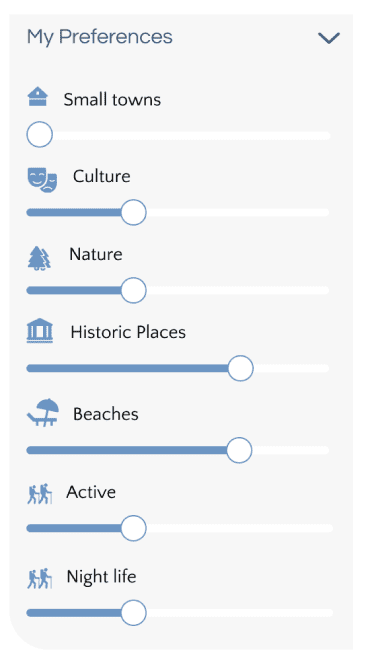
My preferences

5
Small Towns
5
Culture
5
Great Food
5
Nature
5
Historic Places
5
Beaches
5
Night Life
5
Active

Book hotels through RoutePerfect. Secure rooms and rates – free cancellation available. Enjoy Booking.com Genius loyalty program and get travel perks worth up to $300.

Booking.com logo Genius Discounts
Level 1
10% discounts on stays,
applied to the price before taxes & fees.
Level 2
10-15% discounts on stays,
applied to the price before taxes & fees
Level 3
10-20% discounts on stays,
applied to the price before taxes & fees
10% discounts on rental cars,
applied to cost of car only
10-15% discounts on rental cars,
applied to cost of car only
10-20% discounts on rental cars,
applied to cost of car only
+
Routeperfect logo Travel Perks
En-Route
Worth: $200 per car
Discover sights and attractions as you drive between destinations with our ‘En-Route’ app.
Audio City Guide
Worth: $10 - $20 per tour
Explore each city at your own pace with curated audio guides - enjoy one free guide with every stay.
Mobile Organizer
Worth: $10 - $20
Access all your trip details conveniently on your phone, organized in one central place.
Occasions & Events
Worth: $40
Stay up to date on all local events and activities in every destination.

Your trip Itinerary

Portugal Past and Present

11 days

RoutePerfect YOUR ULTIMATE TRIP PLANNER

Go to your plan
map

1

Lisbon, Portugal

4 nights

204.77 km | 2 hrs 10 mins

2

Coimbra, Portugal

2 nights

129.73 km | 1 hr 35 mins

3

Porto, Portugal

3 nights

217.00 km | 2 hrs 30 mins

4

Nazare, Portugal

2 nights

124.48 km | 1 hr 39 mins

5

Lisbon, Portugal

0 nights