My Plan: 

Northern Portugal

Rename
8 days

About Porto

Porto, the second largest city in Portugal, is an ancient city, yet one that is young and vibrant in spirit. A coastal city located on the northern bank of the mouth of the Douro River, it is home to historical sites - baroque churches, bell towers rising over the city, magnificent Art Nouveau style buildings, and narrow alleys studded with bookstores and antiques- as well as a vibrant night life, great shopping, cafes, excellent restaurants, and the Port lodges which feature the outstanding local Port wines. Porto is also known for its laid-back vibe and its beauty - charming homes along the banks of the river, romantic spots, and picturesque bridges which connect its two sides.

Porto, the second largest city in Portugal, is an ancient city, yet one that is young and vibrant in spirit. A coastal city located on the northern bank of the mouth of the Douro River, it is home to historical sites - baroque churches, bell towers rising over the city, magnificent Art Nouveau style buildings, and narrow alleys studded with bookstores and antiques- as well as a vibrant night life, great shopping, cafes, excellent restaurants, and the Port lodges which feature the outstanding local Port wines. Porto is also known for its laid-back vibe and its beauty - charming homes along the banks of the river, romantic spots, and picturesque bridges which connect its two sides.

Portugal derives its name from the city of Porto. Originally a Celtic hamlet called Cale, the Romans added the port and established a settlement on both sides of the river, naming it “Portus Cale” which eventually became Portucale and gave the name not only to the city, but to the nation of Portugal. The Moors ruled briefly during the city’s early times, but Porto came under Christian domination in 1092. Porto became an important port city in the 14th century, and, during the early 19th century, it came under British rule during the Peninsular War. Grapes have been grown in Portugal since ancient times, and the Romans, who inhabited the area for over 500 years, starting from the 2nd century BC, planted vineyards and made wine on the Douro River. During the era of Portugal’s prosperity, after the establishment of its kingdom in 1143, wine became an important export. Port wines started to be produced and exported later- in the 2nd half of the 17th century. Ribreira (riverside) Square is Porto's oldest district, and it was declared a UNESCO World Heritage Site in 1996. Located on the river bank, the old town is a maze of narrow, winding alleys dotted with cafes, workshops, and small shops with elegant, Art Nouveau style facades. There are beautiful squares which are popular meeting places for the "tripeiros" – the name given to the residents of Porto. The facades of the old merchants' houses facing the river are painted in many colors, and the many restaurants and cafes along the river are popular with both locals and tourists. You can cross the river on a rabelo boat along the promenade – one of the colorful boats that had been used to transport port wine down the river and now serve as pleasure boats. Other Porto highlights include the 14th century São Francisco Church, with its lavish baroque interior and ornate gilded carvings, and the palatial 19th-century Palácio de Bolsa, formerly a stock exchange, which was built to impress potential European investors. The Clerigos Tower is an ornate bell tower which rises above the city and has become a city icon. It offers panoramic views of the city, which are well-worth the 225 step climb up! The Sao Bento train station, with its entrance hall composed of 2000 decorative ceramic tiles, recounts highlights from Portugal’s history, the royal dynasty, wars, and the development of transportation. The tiles, painted blue and white, are spectacular. Located on the ruins of a 16th century Benedictine monastery, this is one of the most beautiful train stations in the world. Avenida Los Aliados, a spacious boulevard and the beating heart of the city, is lined with busy cafes and impressive public buildings. With the growth of Porto as a financial center in the late 19th century, this area was transformed, and its buildings reflect the influence of the Parisian architects who arrived in the city at the time. The City Hall, in particular, is one of the most magnificent buildings on the boulevard. The 12th century Se Do Porto Cathedral is built on a hill in the historic center of the city. This Romanesque monument is one of the city’s oldest. The Church of San Francisco Igreja De Sao Francisco, known as the 18th century baroque sailors' church, is one of the most spectacular in Portugal. Though its origins are Romanesque, it was transformed with Gothic architecture and elements of the Baroque style. Porto’s main shopping street, Rua Santa Catarina, is lined with boutiques, international brands, and a lively, young atmosphere. You’ll find trendy cafes, including the legendary Majestic, which opened in 1921, and boasts impressive Art Nouveau design, mirrors, and sculptures – and a star-studded patron list. Another city highlight is the gorgeous Lello Bookstore, one of the most outstanding bookstores in Europe. More than a century old, the bookstore boasts Art Nouveau facade and a neo-Gothic interior design with carved wooden walls, stained glass windows, and a magnificent red staircase. Thinking of Hogwarts? Lello is said to have served as the inspiration for it. (JK Rowling had once lived in Porto!) Near the center of the city is a park called Crystal Palace. Though the original Crystal Palace, built in 1865, no longer remains, the park is home to magnificent gardens, charming architecture, fountains, a wonderful view of the river, and a modern public library. Porto’s exceptional Museum of Modern Art, known as the Serralves Museum, is the foremost museum of its kind in Portugal. It is located on the grounds of the Serralves Estate, which also includes a park and a villa. Porto is a vibrant cultural city. It embodies a combination of the old and new, impressive history and avant-garde urban renewal – in short, a popular destination with its lively nightlife, outstanding wine culture, and breathtaking beauty!

re-order

Porto

Free cancellation

en route icon

Sights on the way 128.53 km | 1 hr 48 mins

About Viseu

It is home to outstanding religious architecture and sacred art and is characterized by charming cobbled streets, winding alleys, public gardens, and a famous central square, Praca da Republica, which is adorned with flowers and fountains. 

It is home to outstanding religious architecture and sacred art and is characterized by charming cobbled streets, winding alleys, public gardens, and a famous central square, Praca da Republica, which is adorned with flowers and fountains. 

Legend has it that, before the Romans captured Viriathus, the Lusitanian warrior and national hero who fought against the Roman conquest in 139 BC, he hid in a cave in Viseu. Several Visigoth nobles established the city as their court during the Middle Ages, but it is best known as the birthplace of one of the greatest painters of the Portuguese Renaissance, Vasco Fernandez. In the 15th century, Alfonso V completed the construction of the city walls, and, as the city prospered from agriculture and trade, it expanded beyond the walls. Construction of the majestic Cathedral of Viseu was started in the 12th century, and it features a mixture of classic Renaissance, Manueline, and Mannerist architectural influences. It has two beautiful bell towers and a stunning interior with a vaulted ceiling and golden altar. It stands in all its glory on a rock towering high above the city. From the square in front of the cathedral there is a spectacular view of the surrounding plains. In front of the cathedral is the 18th century Igreja Da Misericordia, with a rococo facade, which houses the Misericordia Museum with an impressive collection of sacred art and paintings from the 17th-19th centuries. The Grao Vasco Museum is named after Vasco Fernandez, and it contains a unique collection of outstanding Renaissance art, including altarpieces from the Viseu Cathedral, which are, at least in part, attributed to the famous painter. Viseu is home to several universities and is an economic, cultural, and agricultural center of the region. It is famous for its wine, the "Burgundy of Portugal," which is produced from the vineyards in the Regiao do Dao region that have been growing this special variety of red velvet grapes for over 2000 years.

re-order

Viseu

Free cancellation

en route icon

Sights on the way 92.93 km | 1 hr 17 mins

About Vila Real

Vila Real is situated on the steep slopes above the confluence of the Corgo and Cabril Rivers and between mountain ranges. A university town, it was originally established in the 13th century by King Denis.

Vila Real is situated on the steep slopes above the confluence of the Corgo and Cabril Rivers and between mountain ranges. A university town, it was originally established in the 13th century by King Denis.

The Avenida Carvalho Araujo is the city’s main boulevard which crosses its historic center. The city’s main buildings are located there – the 19th century City Hall, the current tourist office which is housed in Casa do Arco, a lovely 16th century house with Manueline windows, and the 15th century Gothic cathedral, the Igreja de Sao Pedro, which had been part of a Dominican monastery. Its exceptional ceiling is made of carved, golden wood and it features 18th century hand-painted tiles (Azulejos) and a stunning Baroque façade. There are also many stately homes of noble families, with traditional wrought iron balconies and still bearing their family coats-of-arms, which can be seen along the street. Notably, the home of the famous explorer, Diogo Cao still remains. There is also a waterfront boulevard with great views. Vila Real was a popular area for country homes, most notably the Palacio do Mateus, the Portuguese royal family’s vacation home during the 16th and 17th centuries. Located a short distance from Vila real, it has a stunning Baroque façade and ornate stairway and is adorned with rooftop statues and a spectacular garden. The palace is open to tours and is also a venue for concerts and other cultural events. Vila Real is also known for its port wine trade, and is situated close to the Parque Natural da Serra do Alvao, a beautiful nature reserve featuring high, rocky mountains, spectacular waterfalls, and green valleys. 

re-order

Vila Real

Free cancellation

en route icon

Sights on the way 97.56 km | 1 hr 17 mins

About Porto

Porto, the second largest city in Portugal, is an ancient city, yet one that is young and vibrant in spirit. A coastal city located on the northern bank of the mouth of the Douro River, it is home to historical sites - baroque churches, bell towers rising over the city, magnificent Art Nouveau style buildings, and narrow alleys studded with bookstores and antiques- as well as a vibrant night life, great shopping, cafes, excellent restaurants, and the Port lodges which feature the outstanding local Port wines. Porto is also known for its laid-back vibe and its beauty - charming homes along the banks of the river, romantic spots, and picturesque bridges which connect its two sides.

Porto, the second largest city in Portugal, is an ancient city, yet one that is young and vibrant in spirit. A coastal city located on the northern bank of the mouth of the Douro River, it is home to historical sites - baroque churches, bell towers rising over the city, magnificent Art Nouveau style buildings, and narrow alleys studded with bookstores and antiques- as well as a vibrant night life, great shopping, cafes, excellent restaurants, and the Port lodges which feature the outstanding local Port wines. Porto is also known for its laid-back vibe and its beauty - charming homes along the banks of the river, romantic spots, and picturesque bridges which connect its two sides.

Portugal derives its name from the city of Porto. Originally a Celtic hamlet called Cale, the Romans added the port and established a settlement on both sides of the river, naming it “Portus Cale” which eventually became Portucale and gave the name not only to the city, but to the nation of Portugal. The Moors ruled briefly during the city’s early times, but Porto came under Christian domination in 1092. Porto became an important port city in the 14th century, and, during the early 19th century, it came under British rule during the Peninsular War. Grapes have been grown in Portugal since ancient times, and the Romans, who inhabited the area for over 500 years, starting from the 2nd century BC, planted vineyards and made wine on the Douro River. During the era of Portugal’s prosperity, after the establishment of its kingdom in 1143, wine became an important export. Port wines started to be produced and exported later- in the 2nd half of the 17th century. Ribreira (riverside) Square is Porto's oldest district, and it was declared a UNESCO World Heritage Site in 1996. Located on the river bank, the old town is a maze of narrow, winding alleys dotted with cafes, workshops, and small shops with elegant, Art Nouveau style facades. There are beautiful squares which are popular meeting places for the "tripeiros" – the name given to the residents of Porto. The facades of the old merchants' houses facing the river are painted in many colors, and the many restaurants and cafes along the river are popular with both locals and tourists. You can cross the river on a rabelo boat along the promenade – one of the colorful boats that had been used to transport port wine down the river and now serve as pleasure boats. Other Porto highlights include the 14th century São Francisco Church, with its lavish baroque interior and ornate gilded carvings, and the palatial 19th-century Palácio de Bolsa, formerly a stock exchange, which was built to impress potential European investors. The Clerigos Tower is an ornate bell tower which rises above the city and has become a city icon. It offers panoramic views of the city, which are well-worth the 225 step climb up! The Sao Bento train station, with its entrance hall composed of 2000 decorative ceramic tiles, recounts highlights from Portugal’s history, the royal dynasty, wars, and the development of transportation. The tiles, painted blue and white, are spectacular. Located on the ruins of a 16th century Benedictine monastery, this is one of the most beautiful train stations in the world. Avenida Los Aliados, a spacious boulevard and the beating heart of the city, is lined with busy cafes and impressive public buildings. With the growth of Porto as a financial center in the late 19th century, this area was transformed, and its buildings reflect the influence of the Parisian architects who arrived in the city at the time. The City Hall, in particular, is one of the most magnificent buildings on the boulevard. The 12th century Se Do Porto Cathedral is built on a hill in the historic center of the city. This Romanesque monument is one of the city’s oldest. The Church of San Francisco Igreja De Sao Francisco, known as the 18th century baroque sailors' church, is one of the most spectacular in Portugal. Though its origins are Romanesque, it was transformed with Gothic architecture and elements of the Baroque style. Porto’s main shopping street, Rua Santa Catarina, is lined with boutiques, international brands, and a lively, young atmosphere. You’ll find trendy cafes, including the legendary Majestic, which opened in 1921, and boasts impressive Art Nouveau design, mirrors, and sculptures – and a star-studded patron list. Another city highlight is the gorgeous Lello Bookstore, one of the most outstanding bookstores in Europe. More than a century old, the bookstore boasts Art Nouveau facade and a neo-Gothic interior design with carved wooden walls, stained glass windows, and a magnificent red staircase. Thinking of Hogwarts? Lello is said to have served as the inspiration for it. (JK Rowling had once lived in Porto!) Near the center of the city is a park called Crystal Palace. Though the original Crystal Palace, built in 1865, no longer remains, the park is home to magnificent gardens, charming architecture, fountains, a wonderful view of the river, and a modern public library. Porto’s exceptional Museum of Modern Art, known as the Serralves Museum, is the foremost museum of its kind in Portugal. It is located on the grounds of the Serralves Estate, which also includes a park and a villa. Porto is a vibrant cultural city. It embodies a combination of the old and new, impressive history and avant-garde urban renewal – in short, a popular destination with its lively nightlife, outstanding wine culture, and breathtaking beauty!

re-order

Porto

Free cancellation

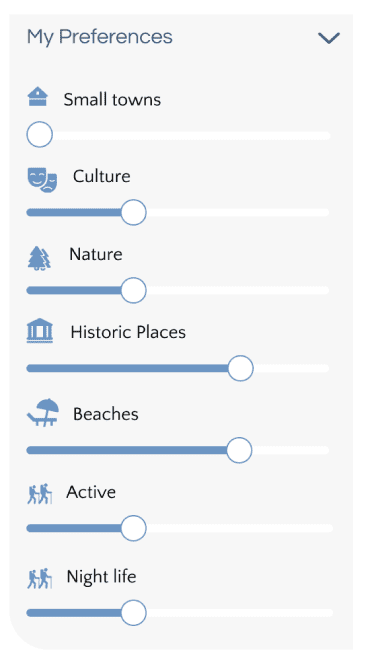
My preferences

5
Small Towns
5
Culture
5
Great Food
5
Nature
5
Historic Places
5
Beaches
5
Night Life
5
Active

Book hotels through RoutePerfect. Secure rooms and rates – free cancellation available. Enjoy Booking.com Genius loyalty program and get travel perks worth up to $300.

Booking.com logo Genius Discounts
Level 1
10% discounts on stays,
applied to the price before taxes & fees.
Level 2
10-15% discounts on stays,
applied to the price before taxes & fees
Level 3
10-20% discounts on stays,
applied to the price before taxes & fees
10% discounts on rental cars,
applied to cost of car only
10-15% discounts on rental cars,
applied to cost of car only
10-20% discounts on rental cars,
applied to cost of car only
+
Routeperfect logo Travel Perks
En-Route
Worth: $200 per car
Discover sights and attractions as you drive between destinations with our ‘En-Route’ app.
Audio City Guide
Worth: $10 - $20 per tour
Explore each city at your own pace with curated audio guides - enjoy one free guide with every stay.
Mobile Organizer
Worth: $10 - $20
Access all your trip details conveniently on your phone, organized in one central place.
Occasions & Events
Worth: $40
Stay up to date on all local events and activities in every destination.

Your trip Itinerary

Northern Portugal

7 days

RoutePerfect YOUR ULTIMATE TRIP PLANNER

Go to your plan
map

1

Porto, Portugal

2 nights

128.53 km | 1 hr 48 mins

2

Viseu, Portugal

2 nights

92.93 km | 1 hr 17 mins

3

Vila Real, Portugal

2 nights

97.56 km | 1 hr 17 mins

4

Porto, Portugal

1 nights